Solution · Custom computer vision

Catch the wrong order before it leaves the window.

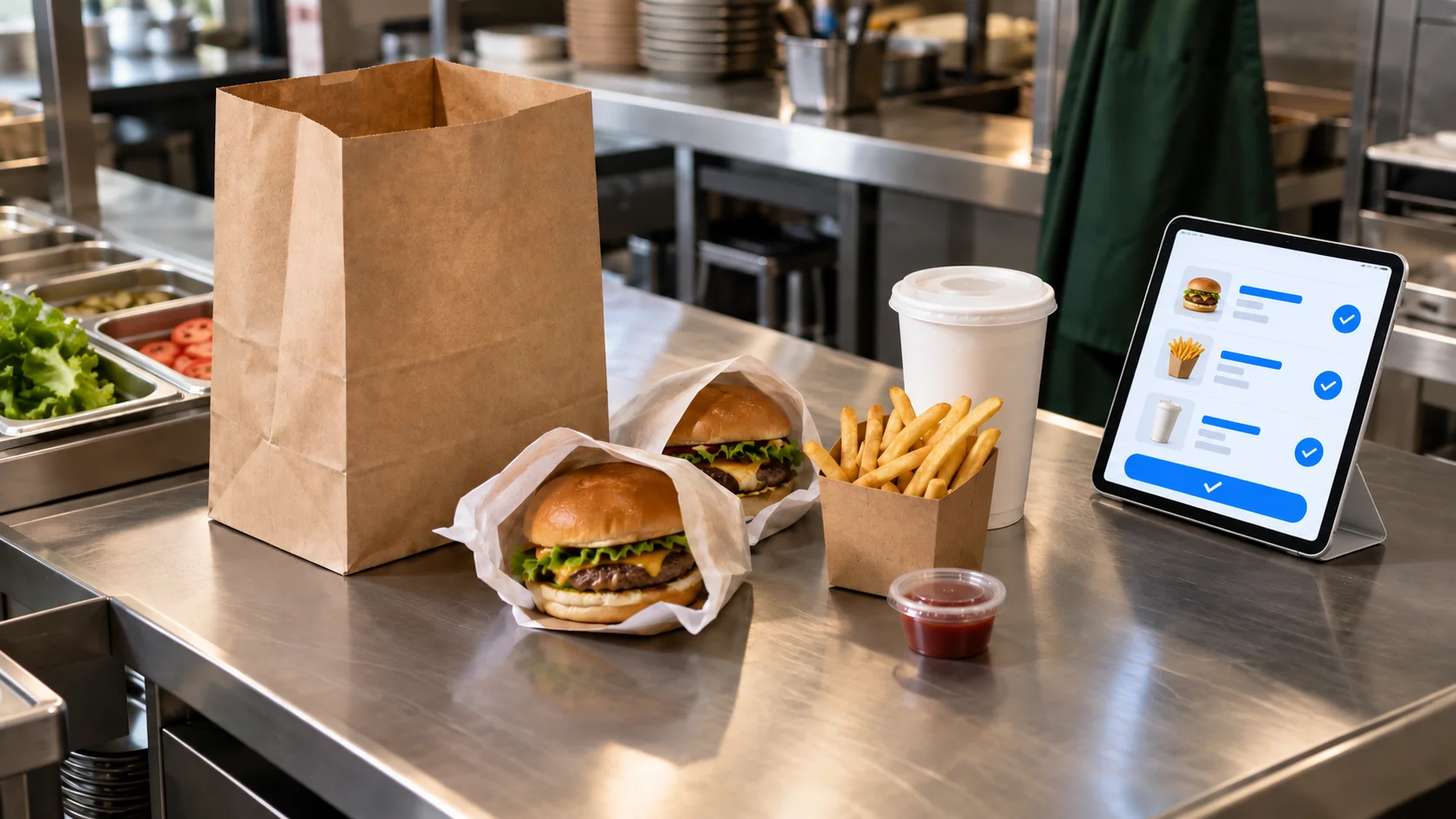
A custom computer-vision build for the QSR drive-thru. It reads the make line, matches the bag to the POS ticket, and flags the mismatch while the order can still be fixed. It runs on the cameras you already own.

Book your consultation
or reach us directly
Call us855-577-0400
  • NDAA-compliant
  • Platform-agnostic
  • 1,000+ deployments over 15 years

Order-accuracy computer vision is a custom-built model that watches the make line and handoff window, compares the prepared order against the live POS ticket, and flags a mismatch before the bag reaches the car. Tec-Tel builds it when no off-the-shelf video platform can read your specific menu and make process. It runs on the cameras you already record, ties every flagged order to its transaction, and is tuned in a pilot store before it rolls out across the footprint.

~87%
industry drive-thru order accuracy, meaning roughly 1 in 8 orders is wrong (2025 QSR Drive-Thru Study)
Existing cameras
the model runs on the make-line and window feeds you already record
POS-paired
every flagged order ties back to the ticket and the camera that caught it
Built, not bought
a custom model when no off-the-shelf product fits the operational problem

§01  What the build does

From recorded video to a number your line can act on.

A camera records the make line. A custom model turns it into structured events: this order is two items short, that size is wrong, this lane is trading speed for mistakes. Each one ties back to the ticket and the camera that caught it, so the fix happens in the window, not the complaint queue.

Make-line item verification The model watches the assembly station and recognizes what is being built: the sandwich, the side, the drink, the count of items staged in the bag. It compares that against the live POS ticket for the lane.
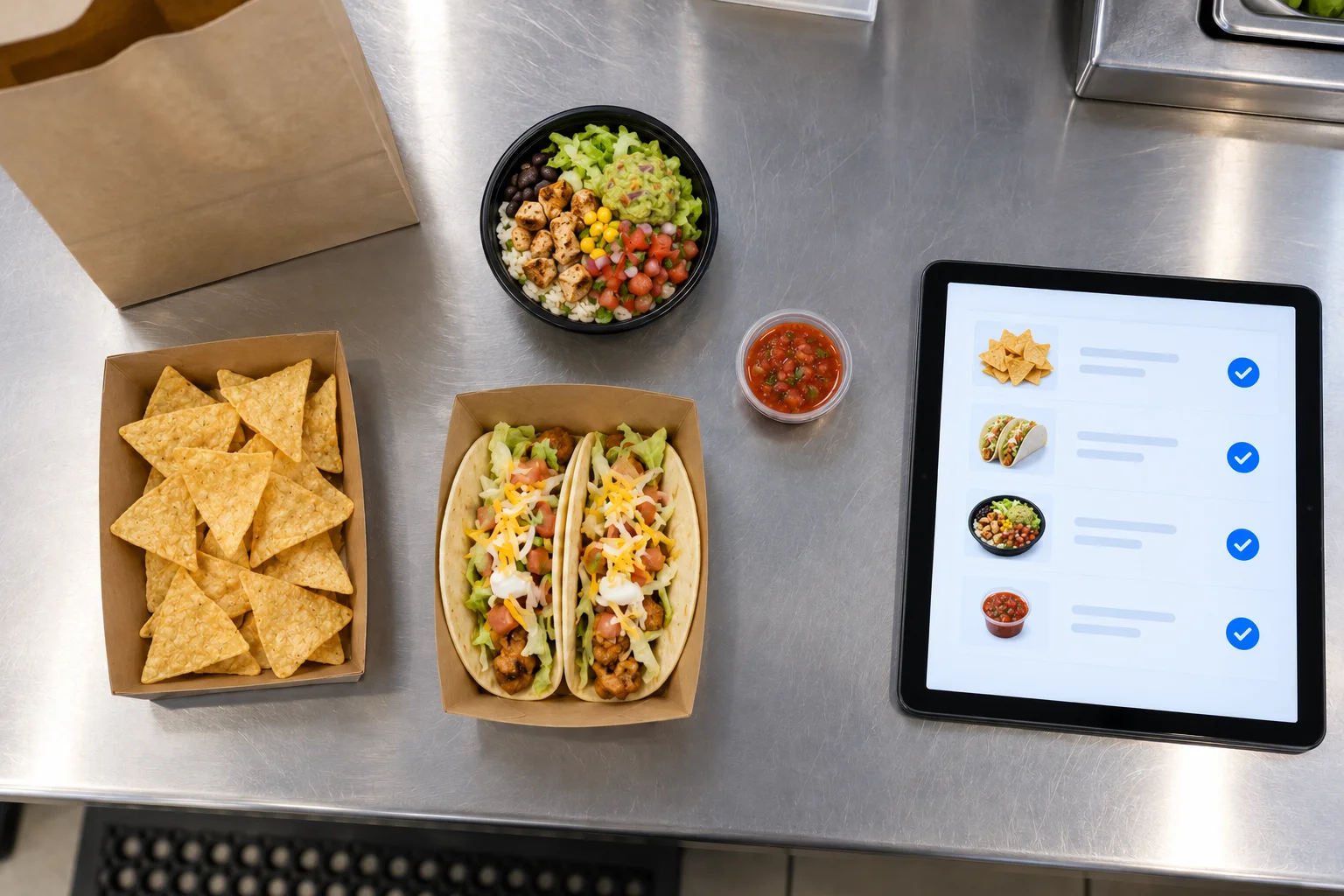
Order-to-ticket matching Each prepared order is matched to its transaction. A missing item, a wrong size, or a substitution surfaces as a structured event tied to the order number, not a vague "something looked off" note.
Handoff-window catch The mismatch fires before the bag leaves the window, while the order can still be corrected. The alert lands on a screen the line already watches, so the fix happens in the lane, not in tomorrow's complaint queue.
Refund and remake correlation Flagged orders pair with the POS exception report. A remake or refund auto-clips the make-line and window video, so a recurring error becomes a coaching moment with footage instead of a guess.
Per-shift and per-store reporting Error rate by item, by station, by shift, by store. An area developer sees which units and which day-parts drive the accuracy gap, and where a process fix would move the number.
Speed-of-service context Accuracy and lane time read together. The system shows where a push for speed buys mistakes, so the trade-off is managed on data, not on the timer alone.

§02  The problem

A wrong order is a refund, a remake, and a customer you may not see again.

Across the industry, drive-thru order accuracy sits near 87 percent in the 2025 QSR Drive-Thru Study from Intouch Insight and QSR Magazine. Roughly one order in eight goes out wrong. Each one is a remake, a refund, wasted food, and a few minutes of lane time the next car waits through.

The cost is not only the comped meal. A wrong order at the window is the moment a regular decides the unit two exits down is worth the detour. Speed-of-service pressure makes it worse: when the timer rules the line, the bag goes out faster and checks itself less.

Most accuracy programs rely on a manager spot-checking orders or the customer calling it out after the fact. Neither catches the error in the window, where it is cheap to fix. By the time a complaint reaches corporate, the order, the shift, and the chance to coach the line are all gone.

§03  Why off-the-shelf falls short

No VMS ships an "is this order correct" button.

A standard video platform records the make line and the window. It can tell you a person was present, a line was crossed, a motion event happened. It cannot tell you that the third sandwich in the bag was supposed to be a wrap, or that the order is two items short of the ticket.

That gap is the difference between a generic analytics pack and a problem solved. Order accuracy depends on your menu, your packaging, your make-line layout, and how your POS structures a ticket. No shelf product already knows your build process. This is exactly the case Tec-Tel builds for.

§04  How Tec-Tel builds it

We scope the problem, build the model to your line, and tune it in your stores.

This is a custom computer-vision build, not a license activation. Tec-Tel scopes the operational problem first: which errors cost you the most, where on the line they happen, and what a correct order looks like for your menu. The model is built and trained against that reality, then validated in a pilot store before it touches the wider footprint.

  • Scope. We sit with your ops team and walk the line, defining the errors worth catching, the POS integration path, and the accuracy bar that makes the project pay for itself.
  • Build. The model is trained to recognize your menu items, packaging, and make-line steps, and to read the POS ticket stream for the lane. It runs on the cameras already covering the make line and window.
  • Tune. A pilot store runs first. We measure detections against ground truth, tune confidence thresholds and zones, and cut false alarms until the line trusts the alert. Only then does it expand by region.
  • Operate. Tec-Tel stands behind the system after go-live: retraining as the menu changes, reporting that reaches the area developer, and one team accountable for the result.

§05  Runs on what you own

No rip-and-replace. The model reads the cameras already on the line.

The build runs on the make-line and window cameras you already record, as long as they output a usable stream at a workable resolution and framerate. No new camera over every station, no five-year capital refresh to start the project.

Where a critical angle is missing, we add a single camera to cover it rather than rebuilding the whole fleet. The point is to turn the footage you already capture into a number your operators can act on, and to scope the spend to the cameras that carry the analytics.

Questions buyers ask us

FAQ

How does order-accuracy computer vision actually work?
The model watches the make line and the handoff window on the cameras you already record. It recognizes the items being prepared and staged, then matches them against the live POS ticket for that lane. When the prepared order does not match the ticket, a missing item, a wrong size, a substitution, it fires a structured alert tied to the order number and the camera that caught it, before the bag leaves the window.
Why not just use our existing camera system or VMS for this?
A standard VMS records video and detects generic events like motion or a line crossing. It has no concept of your menu, your packaging, or what a correct order looks like. Order accuracy is specific to how you build food and how your POS structures a ticket, so no off-the-shelf product already knows your process. Tec-Tel builds a custom model for exactly this kind of operational problem.
Do we have to replace our cameras to run it?
Usually no. The model runs on the make-line and window cameras you already record, as long as they output a usable stream at a workable resolution and framerate. Where a needed angle is missing, we add a single camera instead of rebuilding the fleet. We scope your existing coverage in the consultation and recommend hardware only where the current view cannot carry the analytics.
How accurate is the detection, and how do you handle false alarms?
Real-world accuracy starts lower than the goal and climbs as the model is tuned to your line. That is why every build runs through a pilot store first: we measure detections against ground truth, adjust zones and confidence thresholds, and cut false alarms until the line trusts the alert. The system expands to more stores only after it holds up in the pilot.
Does it integrate with our POS and exception reporting?
Yes for most modern stacks. Order-to-ticket matching reads the POS event stream for the lane, and flagged orders pair with the POS exception report so a remake or refund auto-clips the make-line and window video. Direct named integrations depend on your specific POS and VMS, which we confirm during scoping.
What does a build like this cost?
A custom computer-vision build is scoped to the problem: the number of stores, the error types worth catching, the POS integration path, and how much usable camera coverage already exists. A single pilot unit and a regional rollout amortize very differently. Tec-Tel scopes against your real footprint and comes back with a defensible budget and the accuracy bar the project needs to clear to pay for itself. That scope is the free consultation.
Is this only for drive-thru, or can it watch other operational problems?
Order accuracy is the worked example because the cost is so visible, but the same approach applies wherever an off-the-shelf product cannot read your specific operation: portioning consistency, prep-station compliance, packaging completeness, or staffing at the line during a rush. If the problem is visible on camera and no shelf product solves it, it is a candidate for a custom build.

Book a walkthrough

Have an operational problem no product solves?

The free consultation walks your line, names the errors worth catching, and scopes whether a custom build pays for itself across your footprint. If an off-the-shelf product fits better, we'll tell you that too.

  • Tell us how many sites you run and what's already in place. We'll show you what a build or upgrade looks like.
  • Straight answers from the team that does the work. We're platform-agnostic, so you get the system that fits your sites, not one brand's catalog.

Since 2010 · 1,000+ deployments nationwide · ISN-accredited

Or send the details

How can we help?

What you're looking for, plus any details. We review it and follow up, usually the same day.